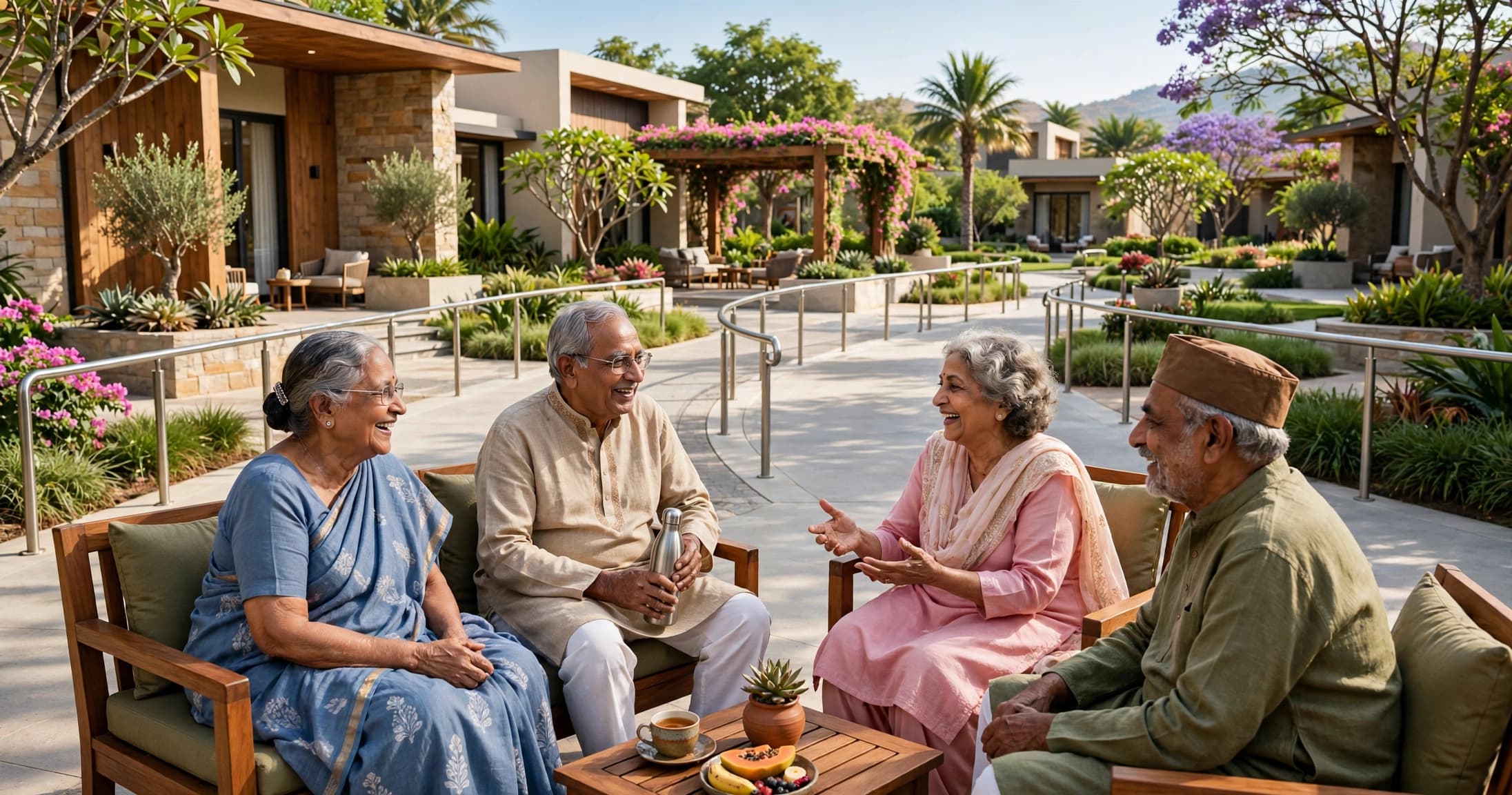
India is undergoing a fundamental demographic and socio-economic transformation. With the national senior citizen population (aged 60+) projected to reach 230 million by 2036 (comprising nearly 15% of the total population), the concept of post-retirement living has evolved. The traditional joint-family model has shifted toward nuclear households, while affluent retirees and Non-Resident Indian (NRI) parents demand independent, professionally managed senior living communities.
According to industry research published by JLL India and demographic analysis by CBRE India, India’s senior living real estate market is expanding from $1.62 billion toward $8.98 billion by 2032, growing at a compound annual growth rate (CAGR) of over 30%. Crucially, integrated senior housing developments command a 12% to 15% price premium over regular residential apartments due to specialized medical infrastructure, barrier-free architecture, and continuous hospitality management.
Understanding the operational models, healthcare integrations, and legal ownership frameworks of senior living is essential for retirees, overseas NRI children, and long-term healthcare real estate investors.