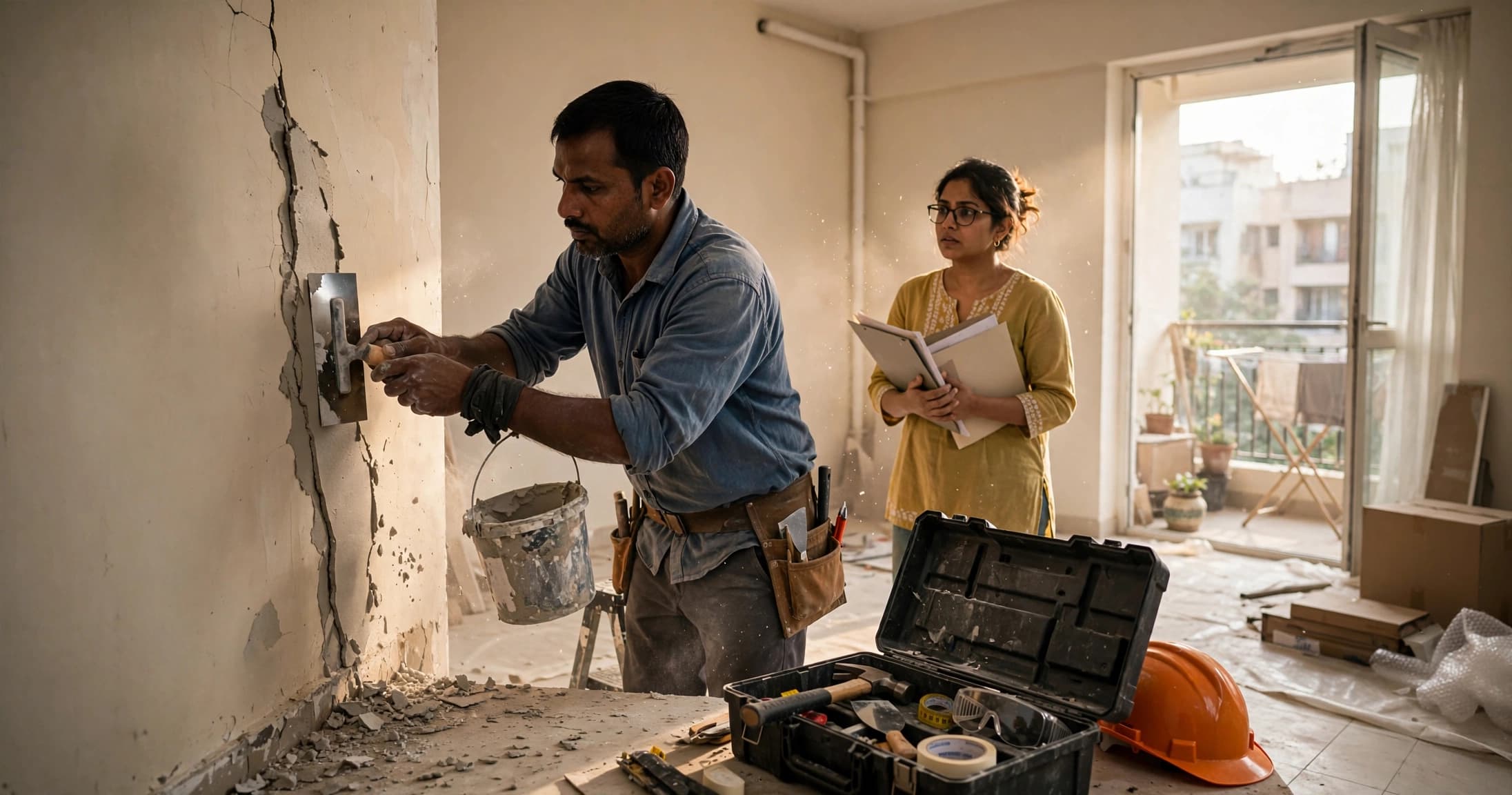
Moving into a newly constructed apartment is a celebratory milestone, but for thousands of Indian homebuyers, the joy is quickly overshadowed by structural and construction defects. Within months of taking possession, residents frequently encounter severe wall dampness, ceiling seepage from upper-floor bathrooms, hollow flooring tiles, recurring lift breakdowns, and structural plaster cracks.
Historically, developers dismissed these complaints as "routine maintenance issues," forcing individual flat owners or newly formed Resident Welfare Associations (RWAs) to spend lakhs of rupees on repairs.
The legal landscape changed permanently with the enactment of the Real Estate (Regulation and Development) Act, 2016 (RERA). Under Section 14(3) of the Act, developers are bound by a statutory 5-Year Defect Liability Period. If any structural defect or deficiency in workmanship, quality, or services is brought to the developer's notice within five years of possession, the promoter is legally mandated to rectify the defect free of cost within 30 days.
Understanding what qualifies as a structural defect, how the 30-day timeline operates, and how to execute a legal defect notice empowers homeowners to hold builders accountable.