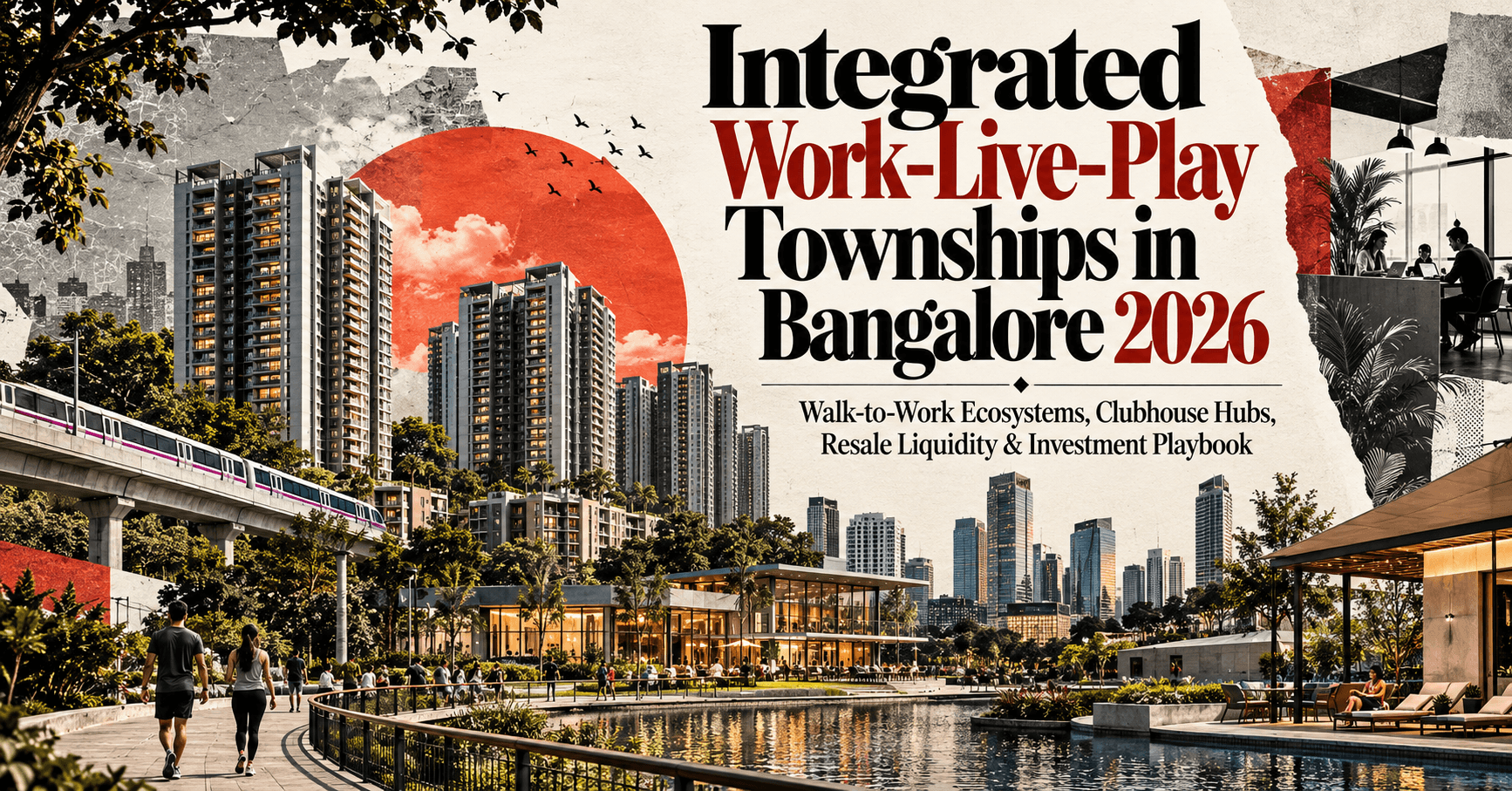
As Bengaluru’s urban footprint expands and daily cross-city commuting friction challenges traditional residential choices, urban planning preferences have undergone a structural shift. In 2026, standalone apartment buildings and isolated residential blocks are taking a back seat to massive integrated work-live-play townships. Spanning anywhere from 30 to over 150 acres across high-growth peripheral and corridor micro-markets like Sarjapur Road, Whitefield, Devanahalli, and Bannerghatta Road, these self-sustained mega-communities combine high-rise residences, grade-A office spaces, high-street retail, educational institutions, and expansive healthcare facilities within a single secured perimeter.
Mastering integrated township investments requires understanding land-scale advantages, master-plan phasing, secondary resale liquidity premiums, and institutional financing terms. This comprehensive guide breaks down Bengaluru’s 2026 township boom, walk-to-work ecosystem dynamics, financial performance metrics, and smart property acquisition strategies.
What You'll Learn:
The defining characteristics of integrated "work-live-play" townships and why they command higher resale liquidity than standalone apartments
Micro-market analysis: tracking mega-township hubs across East and North Bangalore growth corridors
Infrastructure self-sufficiency: evaluating captive sewage treatment plants, solar micro-grids, and multi-acre central parks
Financial valuation metrics: comparing appreciation rates, rental yields, and maintenance reserve funds of township properties
How to discover verified, premium township homes directly on Listifyi without broker spam