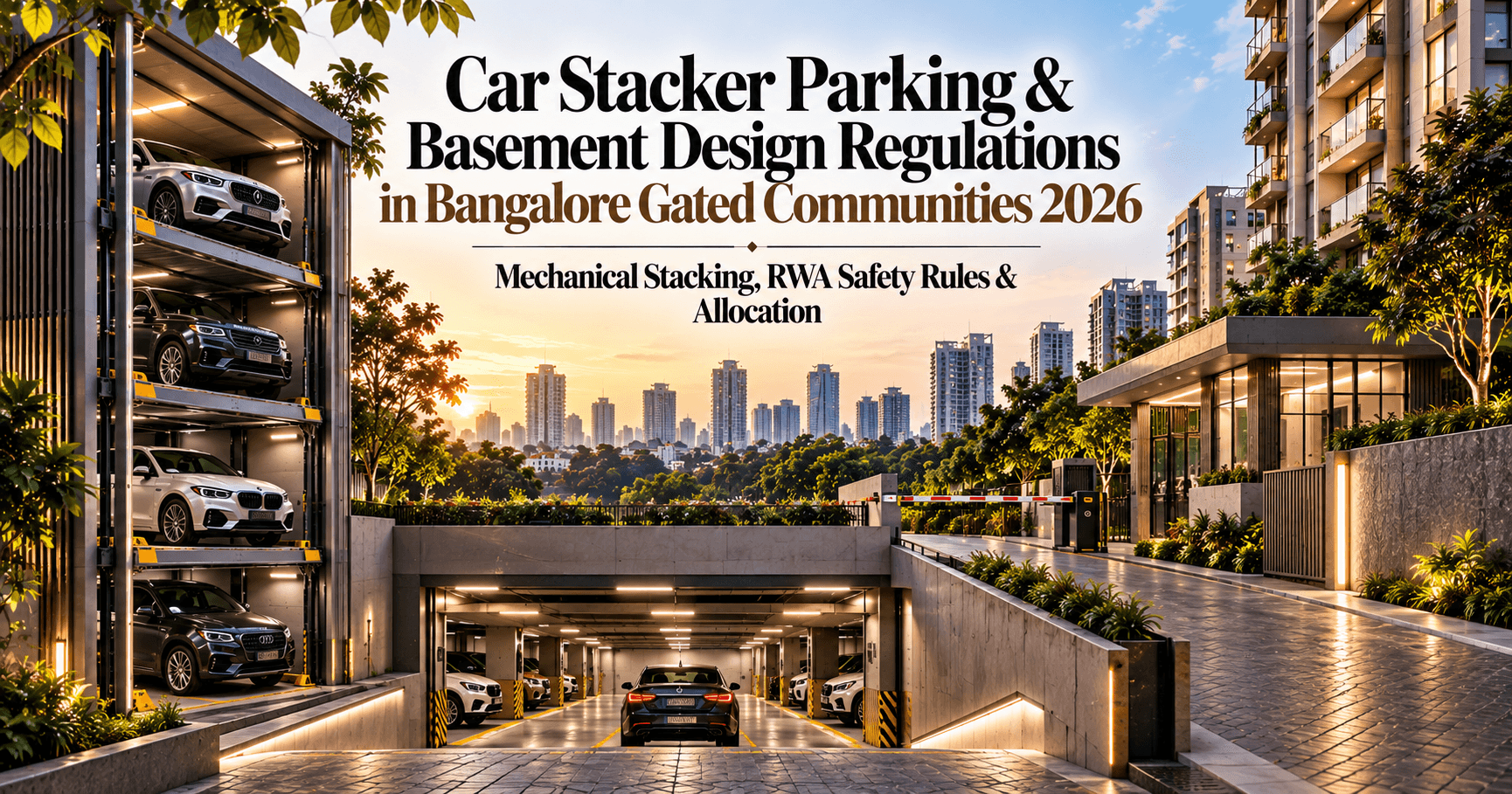
As vehicle ownership per household in Bangalore expands rapidly, multi-story apartment developments and luxury gated communities frequently face severe space constraints in stilt and underground parking zones. To maximize floor capacity and comply with municipal parking ratios, developers increasingly deploy mechanical car stackers and automated parking systems. However, operating hydraulic stackers in multi-family residential complexes introduces unique operational, structural, and safety challenges that require careful management by Resident Welfare Associations (RWAs).
Navigating car stacker systems requires understanding mechanical weight thresholds, electrical power backups, RWA slot allocation bylaws, and routine maintenance protocols. This comprehensive guide breaks down Bangalore apartment parking regulations, mechanical stacking safety standards, cost-sharing frameworks, and smart property buying strategies for 2026.
What You'll Learn:
The role of mechanical car stackers in meeting urban parking demand and municipal density rules
Structural engineering specifications: weight limits, hydraulic clearance heights, and power backup integration
RWA bylaws governing stacker slot assignments, operational responsibilities, and damage liability
Financial cost-sharing structures for periodic servicing and replacement parts
How to discover verified properties with robust infrastructure directly on Listifyi without broker spam