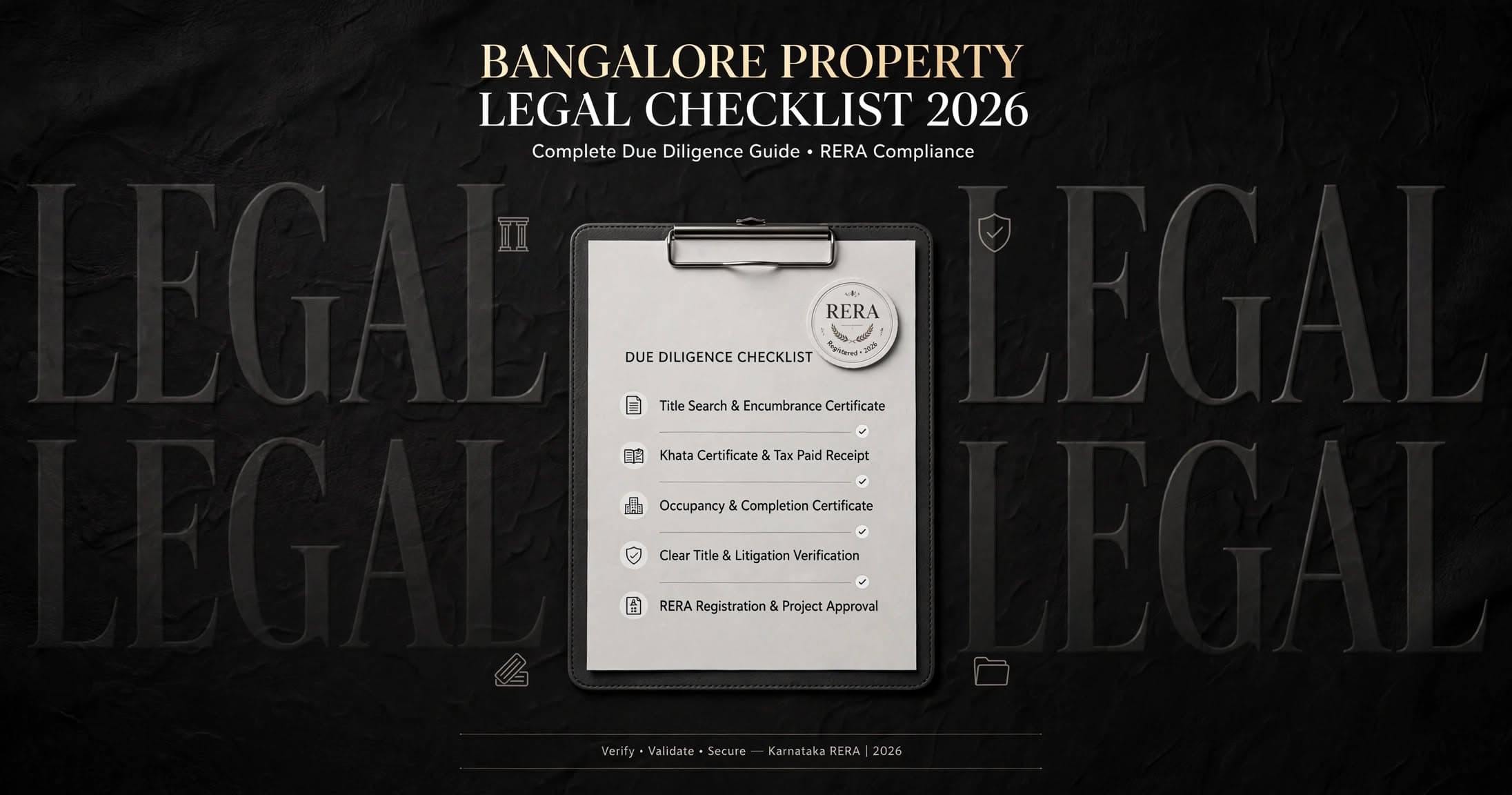
Buying an apartment in Bangalore involves legal paperwork that terrifies most first-time buyers. Property disputes, false titles, and hidden encumbrances can cost ₹10-20L and years of litigation. Yet 70% of Bangalore buyers skip proper legal due diligence—they rely on builders' assurances or agents' promises. This is catastrophic. One single legal oversight can tank your entire investment. This guide provides a complete legal checklist—17-point verification system used by corporate buyers and legal professionals. Use this before committing to any property, and you eliminate 95% of legal risks.
The good news: Bangalore's regulatory framework is strong. RERA Karnataka enforces buyer protections. BBMP maintains property records. Kaveri 2.0 portal tracks taxes. If you verify properly, legal disputes are rare. This guide walks you through every verification step.
Critical Document Verification: Title & Ownership
Before anything else, verify the seller actually owns the property and has full rights to sell.
Step 1: Obtain All Title Documents from Seller
Request complete document chain:
Original sale deed (if old property)
Original purchase deed (how seller bought it)
Mutation certificate from BBMP (ownership transfer record)
Encumbrance certificate (from sub-registrar's office)
Property tax receipts (past 3 years minimum)
Mortgage/charge certificate (if property has loan)
Do NOT proceed without these. If seller hesitates, RED FLAG. Legitimate owners have documents.
Step 2: Verify Clear Ownership (5-Year Rule)
Property must have uninterrupted ownership for minimum 5 years. Check document chain:
2019: Person A sells to Person B (Document 1)
2020: Person B holds property (no transaction)
2024: Person B sells to Person C (Document 2)
2026: You're buying from Person C
This is clean—5+ year ownership, clear chain. If ownership chain has gaps or rapid flips (bought 2023, selling 2024), it might be speculative/problematic.
Step 3: Encumbrance Certificate
This is CRITICAL. Get from local sub-registrar's office or BBMP:
Shows if property has mortgage/loan against it
Shows if property has liens or court orders
Shows tax arrears
Shows legal disputes
A "clear" encumbrance certificate means property is unencumbered (no loans, no disputes). NEVER buy property with pending encumbrance issues without legal counsel.
Process: Visit sub-registrar's office with sale deed, pay ₹50-100, get certificate in 1-2 weeks. Online submission also available through e-services.
Step 4: Certified True Copy of Title Deed
Request seller obtain "Certified True Copy" of original deed from registrar's office:
Costs ₹100-200
Verifies document authenticity
Prevents forged deeds (extremely rare, but happens)
Essential for future sale/refinance